
How should a women’s cycling jersey fit?

There’s no hard and fast rule that you have to wear a cycling jersey to ride your bike – we’re firm believers in wearing what makes you feel confident and comfortable here at VeloVixen! But as we’ve discussed in our guide to finding the best women’s cycling clothing, a cycling jersey can help to keep you more comfortable (thanks to lightweight, fast-drying fabrics), comes loaded with pockets to easily store all your on-the-go essentials and they’re more aerodynamic compared to casualwear so have the added benefit of helping you to ride faster for less effort. Plus, they look great (you can check out our latest women’s cycling jersey designs here).
But whether you’re buying your first cycling jersey, or upgrading your existing cycling wardrobe. Getting the fit right can make a world of difference. And that’s not always as easy as it may sound! Cycling jerseys are designed differently from your everyday clothes, and even other activewear. Which means your cycling jersey size and your streetwear size might be quite different. Add in quite a wide range of variation in sizing between brands, and getting the right fit and size for women’s cycling kit can feel like a bit of a minefield.
This guide will walk you through why cycling jerseys fit differently, how a women’s cycling jersey should fit and how to get the right size so you can get out there in comfort and style.
Jump to…
Why cycling jerseys fit differently
Unlike a regular t-shirt or even a running top, a cycling jersey is designed specifically to be comfortable when you’re in the riding position. That means it needs to be able to move with you when you lean forwards to grasp the handlebars, staying put in the back and offering enough movement across the shoulders to avoid being restrictive. Which is why when you try a cycling jersey on while you’re standing upright, it might take a bit of getting used to. The below mainly applies to road cycling jerseys – we’ll move onto the different fits across cycling disciplines later.
Longer at the back
The cut of a cycling jersey means the hem tends to be cut longer at the back than in the front, giving it a dipped hem look. This helps to prevent the jersey from riding up when you’re bent forwards over the handlebars. It also gives plenty of space to fully utilise the rear pockets.
Shorter at the front
On the flip side, the front hem of a cycling jersey is usually cut slightly shorter. This is to ensure the fabric isn’t going to bunch up around your lower stomach or hips when you’re riding. If the hem were to sit more in line with your hip creases (like many casual and running tops do) then it’s likely it would dig in and start to cause chafe as your legs are constantly moving through the pedal strokes. Again: looks a little strange when you try it on standing up, but makes perfect sense once you hop on the bike and get into your riding position.
Some cycling jersey brands take this to the extreme and offer a more ‘cropped’ fit. However, at VeloVixen we’ve carefully taken on board feedback from our community of women cyclists and in 2025 redeveloped our own brand jerseys (check them out below) to offer a slightly longer fit. Hitting that sweet spot between comfort and confidence.
Recommended products


Tighter sleeves
Unlike casual t-shirts or loose-fit running tops, road cycling jerseys usually have close-fitting sleeves. Your shoulders and upper body are one of the main areas which creates wind-resistance when you ride, so by opting for a closer fit all over (including the sleeves) there’s less fabric to flap around and create drag.
Waist gripper
While the cut of the jersey itself is designed to prevent it from riding up, most cycling jerseys use an elasticated waist band with a gripper (usually silicone) just to make sure your jersey is going to stay in place throughout your ride. There’s nothing more annoying than constantly tugging at your jersey because it keeps riding up! This does mean that, unlike loose-fitting tops, it’s important to check size guides for any waist and hip measurements as well as the chest measurement to get the ideal fit (more tips on how to measure yourself later!)
Rear pockets
Almost all cycling jerseys come with rear pockets. These are usually two or three vertical pockets (we pop an additional zipped pocket on the side of ours to keep the essentials safe and sound in all weathers). A well-fitted cycling jersey will allow you to use your pockets, without sagging and bouncing (indicating the jersey might be too big) or making the jersey feel too tight (suggesting it’s too small).
Should a cycling jersey be tight?
Short answer? It depends. But that’s not helpful, so let’s dig into it a little deeper. Different cycling disciplines favour different fits. A road cyclist lining up for a race is going to prioritise aerodynamics far more than a mountain biker who’s primary objective is enjoying the trails!
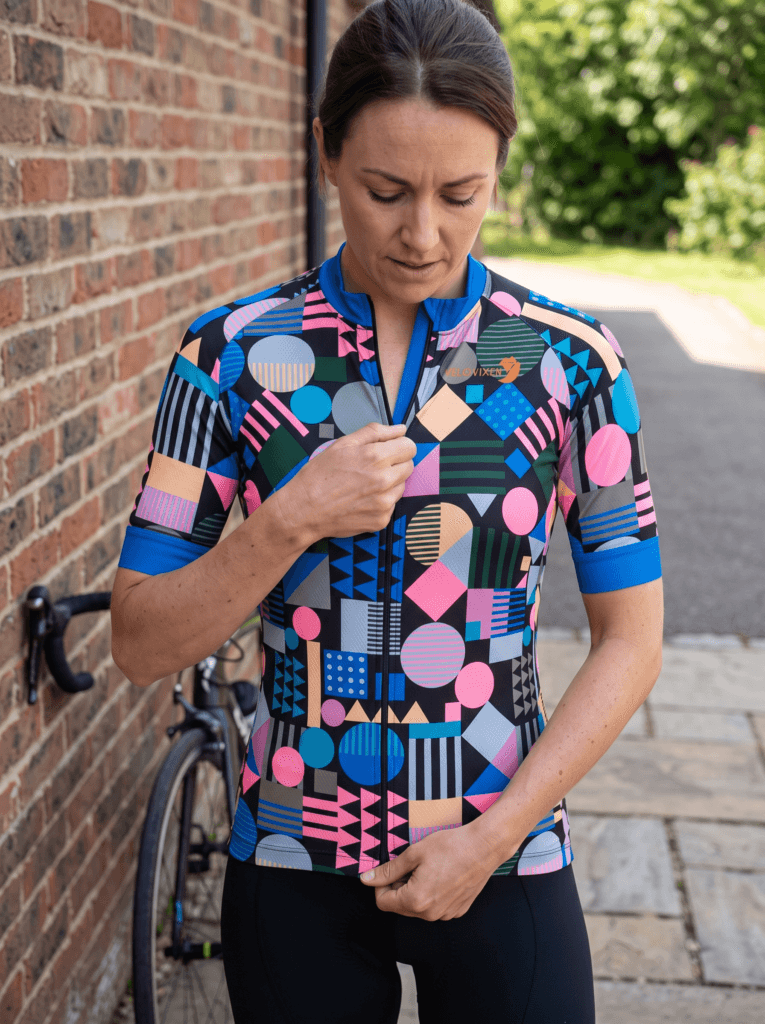
How tight should a road cycling jersey be?
Road cycling jerseys are usually the closest fitting of all cycling jerseys. This is because when you ride on the road, you tend to be riding faster than say on gravel or on mountain bike trails. So reducing wind resistance is much more of a priority. Road cycling jerseys offer a streamlined fit to reduce drag and help you ride faster for less effort. But just because they’re supposed to be close-fitting, doesn’t mean your road cycling jersey should be uncomfortably tight or restrict your movements. So how do you know if it’s too loose, too tight, or that Goldilocks sweet spot: just right. Here’s a quick check list to help you decide:
Road cycling jersey fit check list
- Sits close to the body so the fabric stays smooth and there’s no excess to flap around.
- Has enough stretch to move with you and doesn’t restrict your movement.
- Feels comfortable across the shoulders when you’re reaching for the handlebars.
- You can make use of the rear pockets without the jersey sagging (or conversely, without struggling to actually get anything in the pockets).
- The front zip lies flat, without any rippling or pulling – this is where a women’s-specific fit is key as the cut will be tailored to accommodate your bust without being too loose at the waist.
- Stays comfortably in place without the waistband or the sleeves digging in.
Gravel and leisure cycling jerseys
For casual rides, touring or gravel cycling many cyclists prefer a more relaxed fit, while still enjoying some of the practical features of a road cycling jersey. Gravel cycling jerseys often share a similar style and construction to road cycling jerseys, just with a looser fit because aerodynamics are no longer the main focus.
Mountain bike jerseys
Mountain bike jerseys are usually the loosest-fitting option. The least ‘cycling jersey’ option, many resemble technical sports tops rather than traditional road jerseys, offering greater freedom of movement and room for protective pads where needed. If you don’t get on with the fit or feel of road cycling jerseys but you still want something lightweight, breathable and fast-drying – a mountain bike jersey is a great option.
How should a women’s cycling jersey fit?
So that’s an overview of why cycling jerseys fit a little differently to other sportswear, and what to expect from the different types of jersey when you’re shopping around. So let’s move on to how you know if a cycling jersey is the right fit for you.
Signs your jersey is too small
A cycling jersey that’s too small will be uncomfortable and restrict your movement on the bike. Here’s the signs you might need to size up:
- The front zip pulls apart or ripples when fully zipped.
- Sleeves dig into your arms.
- The waistband feels tight or rolls upwards very easily.
- Rear pockets pull away from your back when loaded.
- You feel restricted when reaching forwards to the handlebars.
- The fabric is stretched tightly across the chest or shoulders.
Remember: cycling clothing often comes up small compared to regular clothing (though this is something we’ve tried to address with our own-brand VeloVixen jerseys to make it easier to find your perfect jersey!) so don’t worry too much about what the label says and go with whatever size feels the most comfortable.
Signs your jersey is too big
An oversized jersey can be just as frustrating, particularly if you’re a road cyclist with a focus on speed and performance. Not sure whether you might need to size down? Here’s what to look out for:
- Excessive loose fabric. If you’ve got a lot of extra fabric around your shoulders and your waist when you’re just trying the jersey on at home, chances are it’ll be flapping in the wind (and let’s face it, driving you a little bit mad) once you hit the road.
- Rear pockets sagging or bouncing when carrying items. This suggests the jersey isn’t tight enough to stay put once the pockets are loaded.
- Sleeves sitting loose rather than comfortably close against your arms.
Good to know: some riders prefer a more relaxed fit and so will size up intentionally. This can also be useful if you plan to layer up underneath your jersey. So while a close-fitting cycling jersey is optimal for road cyclists, if that’s not your preference there’s no rule to say you can’t size up!
How women’s cycling jersey sizing works (and why your cycling kit size and streetwear size might be different)
One of the biggest surprises for new cyclists is discovering that their cycling jersey size isn’t always the same as their everyday clothing size.
That’s completely normal.
Cycling apparel is designed to fit much closer to the body than casual clothing. Many jerseys are intentionally cut to reduce excess fabric, improve comfort in the riding position and help keep pockets stable.
On top of that, brands use different fit profiles. Some produce race-inspired jerseys with a close, aerodynamic cut, while others design more relaxed styles for everyday riding.
For that reason, it’s always worth checking the specific size guide before buying rather than relying on the size printed on the label.
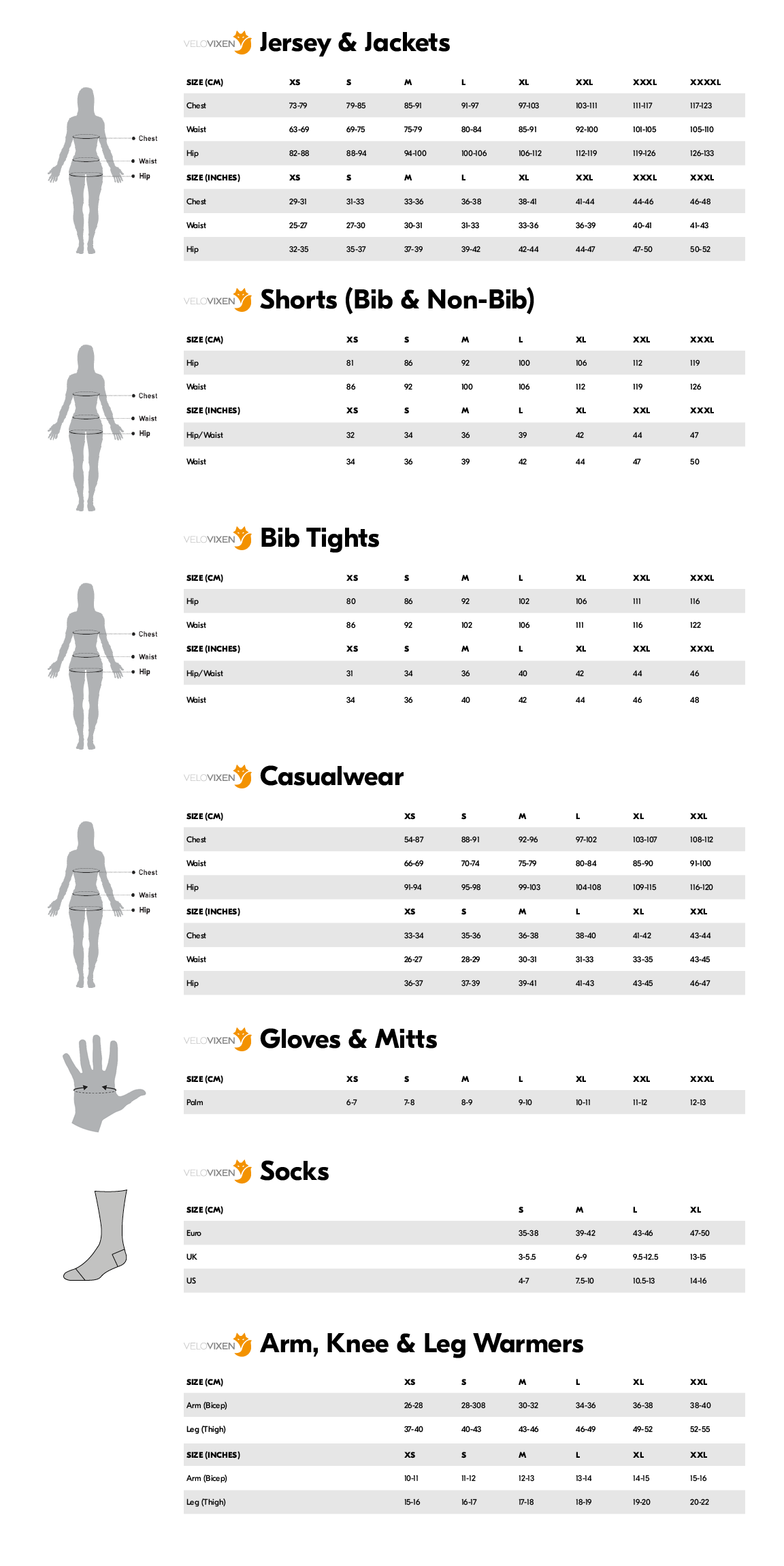
The best way to choose your size is by taking a few simple body measurements and comparing them with the manufacturer’s size chart. A flexible tape measure and a few minutes can save the hassle of exchanging your jersey later.
Measuring yourself
For the most accurate fit:
- Bust: Measure around the fullest part of your bust while keeping the tape level.
- Waist: Measure around your natural waist.
- Hips: Measure around the fullest part of your hips.
When taking measurements, wear lightweight, close-fitting clothing and avoid pulling the tape too tightly.
VeloVixen women’s jersey size guide
Below you’ll find the full women’s cycling clothing size guide for all our VeloVixen kit. We also stock some other brilliant women’s cycling brands, so when you’re browsing our range be sure to double check the individual item size guides to make sure you get the ideal fit!
Should I size up?
Again: it depends! If you prefer a close, performance-focused fit and your measurements fall comfortably within a size range, your usual cycling size is likely to be the best option.
However, you may prefer sizing up if you:
- Like a more relaxed fit.
- Plan to wear thicker base layers underneath during colder weather.
- Sit between two sizes on the size chart.
- Simply don’t enjoy close-fitting clothing.
The most important thing is choosing the jersey that feels comfortable for the way you ride, not the number on the label.
Common women’s cycling jersey fit mistakes (and how to avoid them)
Buying based on your dress size alone
Cycling brands vary considerably, so always check the measurements instead – your size in one brand might be a little different to your size in another!
Choosing a road cycling jersey that’s too loose in the name of comfort
Many new cyclists assume baggier means more comfortable, but too much excess fabric can flap in the wind and cause pockets to bounce. If you want your road cycling jersey to offer a slightly more relaxed fit, while still remaining fit for purpose consider going for an ‘every day’ fit (such as the Stolen Goat Every Day jerseys) instead of a race fit, and if you size up – only size up once. If you’d prefer a baggy fit, go for a gravel or mountain bike jersey instead.
Ignoring your riding position
A jersey may feel slightly different when standing compared with when you’re leaning over the handlebars. If possible, try the fit in a riding position before deciding.
Not thinking about layering
If you regularly ride in cooler weather with a thermal base layer underneath, keep this in mind when selecting your size. Most jerseys offer enough stretch that you can add a base layer without needing to size up. But if you’re between sizes or a jersey feels a bit ‘spray on’ when worn alone, you might want to choose the next size up.
Focusing on the label rather than the fit
Sizing numbers differ from brand to brand. A Medium in one collection may fit very differently from a Medium in another. Your measurements—and how the jersey feels—are much more important than the size printed inside.
FAQs
Should a women’s cycling jersey feel tight when standing?
It’s common for a cycling jersey to feel more fitted when you’re standing upright than when you’re in your riding position. Once you’re on the bike, the cut is designed to feel natural and comfortable. As long as it’s not uncomfortably tight when standing (got to think about the cafe stop comfort too!) and feels good once you’re on the bike, you’re probably good to go.
Why are cycling jerseys longer at the back?
The extra rear length helps keep your lower back covered while you’re leaning forwards and prevents the jersey riding up.
Can I wear a base layer underneath my cycling jersey?
Yes. Many cyclists wear a lightweight or thermal base layer depending on the weather. If you regularly layer up, you may prefer a slightly more relaxed jersey fit.
Should I buy the same size in every cycling brand?
Not necessarily. Sizing and fit vary between manufacturers, so it’s always worth checking the individual size guide before ordering.
Key takeaways
Choosing the right women’s cycling jersey is less about the size on the label and more about finding the fit that suits your body and the type of riding you enjoy.
A good cycling jersey should stay comfortably in place, allow easy movement, keep your rear pockets secure and feel supportive without feeling restrictive. By taking a few simple measurements and using the relevant brand size guide, you’ll be much more likely to find a jersey that keeps you feeling comfortable and confident all ride long.
Find your perfect women’s cycling jersey
From our latest VeloVixen jerseys, created in collaboration with women designers, to stunning jerseys from brands such as Alfonsina and IRIS. VeloVixen is your go-to destination to find the best women’s cycling jerseys. Check out some of our top picks below, or go ahead and browse the full range.
Recommended products
-

VeloVixen Short Sleeve Cycling Jersey – Decca
£60.00 -

IRIS Women’s SS Cycling Jersey Paskal
Original price was: £125.00.£90.00Current price is: £90.00. -

Stolen Goat Topo MTB Short Sleeved Jersey
£40.00 -

Alfonsina Il Diavolo Jersey Pink & Green
£150.00